Call Us Today!
(703) 669-8688
New Patients
(703) 202-1740


Advances in dental materials and laboratory techniques have made replacing missing teeth more predictable and natural-looking than ever. While fixed options such as dental implants and bridgework remain excellent solutions for many patients, removable dentures continue to be a reliable and adaptable choice for restoring function and facial support.
At the office of Village Dental of Leesburg, we design dentures using high-quality materials and careful attention to fit, aesthetics, and comfort. Our goal is to create prostheses that help people speak clearly, eat with confidence, and preserve the contours of the face.
We focus on thoughtful, individualized care that balances durability and ease of maintenance with your personal needs and lifestyle. Whether you are replacing a few teeth or an entire arch, our team works with you to develop a plan that supports long-term oral health.
Losing teeth is more than a cosmetic concern. Missing teeth change the way forces are distributed when you bite and chew, and over time those changes can alter the position of remaining teeth and the shape of the jaw. That can make simple tasks—like eating certain foods or pronouncing particular sounds—more difficult than they were before.
Beyond function, tooth loss often influences how the lower face looks. Without the support of teeth, cheeks and lips can appear flatter and facial lines may become more pronounced. Replacing teeth helps restore that support and can improve the overall harmony of a patient’s facial profile.
Timely replacement of missing teeth reduces the risk of further dental problems as well. A well-planned denture can preserve the spacing and alignment of remaining teeth, protect vulnerable oral tissues, and make routine oral hygiene easier to perform and maintain.
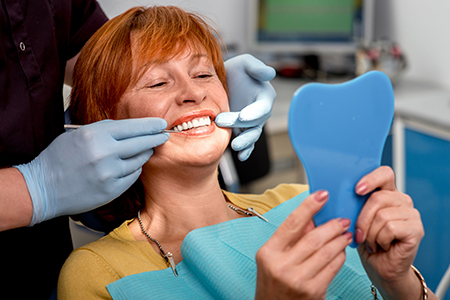
Dentures are removable prosthetic appliances composed of artificial teeth set into a supportive base that rests on the gums. The base is shaped to follow the natural contours of the mouth and to distribute chewing forces evenly. Modern denture teeth are made to mimic the translucency, shape, and occlusion characteristics of natural teeth.
Because dentures are removable, they allow patients to clean both the appliance and the oral tissues thoroughly. This removability can be an advantage when maintaining gum health or caring for remaining natural teeth. At the same time, contemporary design and careful fitting techniques allow removable dentures to feel secure and look very natural.
While dentures are often compared with fixed restorations, they occupy their own role in treatment planning. For many patients they provide an efficient route to restoring a full, functional smile—especially when multiple teeth are missing or when surgical treatment is not the preferred option.
Selecting the right denture begins with a thorough clinical evaluation. Our team considers how many teeth remain, the condition of the gums and underlying bone, your bite, and how you want your smile to look and function. From that assessment we can recommend a solution tailored to your situation.
Removable prostheses are typically grouped into two main categories: full (complete) dentures and partial dentures. Full dentures replace an entire arch of teeth, while partial dentures fill gaps where individual or multiple teeth are missing and rely on remaining teeth for some retention and stability.
Materials and design today offer a range of options—from light, flexible partials to traditional cast frameworks and implant-assisted attachments. Each approach has distinct advantages, and the right choice depends on oral health, functional demands, and patient preference.
Full dentures restore all of the teeth in an arch and are crafted to support both chewing function and facial shape. The anatomy of the gums and jaws, the patient’s muscle dynamics, and how the dentures contact opposing teeth all influence final design and comfort.
A conventional full denture is made after any remaining teeth are removed and the gums have healed. Because the tissues have stabilized by the time the denture is fabricated, this approach can offer a predictable, comfortable fit without frequent early adjustments.
Immediate denture
An immediate denture is inserted on the same day teeth are removed so the patient does not experience a period without teeth. While immediate prostheses provide immediate esthetic benefit, they often require follow-up adjustments and sometimes a reline as the underlying tissues change during healing.
Overdenture
Overdentures gain extra support from retained tooth roots or special attachments. Preserving strategic roots can help maintain bone volume and increase the denture’s stability, while still providing a removable, maintainable appliance.
Implant-supported dentures
Implant-supported dentures use titanium posts placed in the jaw as anchor points. These attachments can dramatically improve retention and reduce movement during function, making eating and speaking easier for many patients.
Partial dentures are indicated when some healthy, stable teeth remain. They restore missing teeth while helping to prevent neighboring teeth from drifting into vacant spaces. Retention may be achieved with clasps, precision attachments, or a combination of components depending on the clinical situation.
Contemporary partials can be designed for maximum comfort and minimal visibility. Options include metal frameworks, flexible resins, or hybrid constructions that balance strength and aesthetics. The goal is an appliance that integrates with the remaining dentition and supports comfortable function.
Our approach to denture design prioritizes both function and appearance. We work to ensure that each prosthesis complements a patient’s bite, facial proportions, and daily needs so it performs well over time.
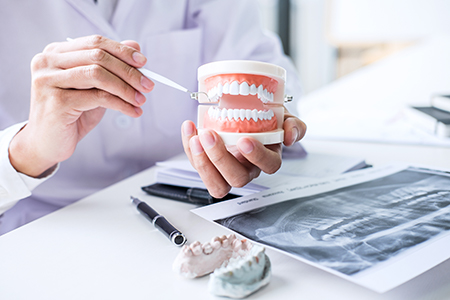
A successful denture begins with a comprehensive evaluation that includes a medical and dental history, a clinical exam, and diagnostic imaging when needed. These steps help identify any conditions that should be treated before fabricating a prosthesis, such as periodontal concerns, decayed teeth, or bony irregularities.
When remaining teeth can be preserved and used to support a partial or overdenture, we discuss the pros and cons of those options. In other cases, strategic extractions and minor surgical adjustments may be recommended to create an oral foundation that will support a comfortable, long-lasting denture.
Communication about expectations is an important part of planning. During the design phase, we take impressions, evaluate bite relationships, and select tooth shapes and shade to achieve a natural appearance. Trial fittings and adjustments ensure that the finished denture performs well for speech, chewing, and aesthetics.

Adapting to new dentures takes time and patience. It’s common to experience mild soreness, increased saliva, or changes in speech initially. These issues often improve with short-term adjustments and practice. Speaking aloud and starting with soft foods can speed the transition to normal function.
Adjusting to a new appliance
A new denture may require several minor adjustments to achieve optimal comfort. If a sore spot develops, wearing the denture briefly before an adjustment visit helps the clinician identify and relieve the area that needs modification.
Temporary increase in saliva
The presence of a new prosthesis often stimulates saliva production at first. This response usually settles down as your mouth becomes accustomed to the denture.
Speaking and eating with confidence
Many people regain comfortable speech within days and return to normal eating as they practice. Begin with softer foods and cut items into small pieces, chewing on both sides to stabilize the denture. Gradually you can reintroduce firmer textures.
Daily cleaning and overnight care
Rinse dentures after meals and brush them daily with a brush designed for prostheses. This prevents plaque buildup and staining on denture teeth and helps keep the appliance hygienic.
Clean and massage the gums and any remaining natural teeth each day to maintain tissue health and circulation. If you wear an upper denture, gently cleanse the roof of the mouth as part of your routine.
Remove dentures at night to give the gums a rest. When not worn, store them in water or a recommended soaking solution to prevent warping and to ensure they remain hygienic.
Improving stability when needed
Some dentures benefit from additional retention methods. While adhesive may help in certain cases, implant attachments or precision clips provide greater stability for patients who need it.
Regular follow-up and oral exams
Routine dental visits allow us to monitor the fit and condition of your denture and check the health of the soft tissues and any remaining teeth. Periodic exams support early detection of changes and ensure prosthetic care remains effective.
Relines and long-term maintenance
As the jawbone and soft tissues remodel with time, the fit of a denture can change. Relines or adjustments restore intimate contact with the tissues and help maintain comfort and function over the long term.
Our office is committed to delivering dentures that perform well and fit comfortably. If you’d like to learn more about how we plan, design, and maintain denture care, please contact us for additional information and to discuss your options.

Dentures are broadly categorized as full (complete) or partial prostheses that replace missing teeth and the supporting structures. Full dentures restore an entire upper or lower arch, while partial dentures fill gaps and use remaining teeth for support and retention. Contemporary materials and designs also include flexible partials and hybrid constructions that balance strength and esthetics.
Within those categories there are variations such as conventional full dentures, immediate dentures placed at the time of extraction, and overdentures that gain added support from retained roots. Implant-supported or implant-assisted dentures use attachments to titanium posts and can significantly improve retention and function for many patients. The best option depends on the number of missing teeth, oral health, and the patient’s functional and esthetic goals.
Determining whether a denture is appropriate begins with a comprehensive clinical examination that evaluates remaining teeth, gum health, bone volume, and bite relationships. The office of Village Dental of Leesburg considers your oral health, medical history, and personal preferences when recommending removable or implant-assisted solutions. Some patients choose dentures when multiple teeth are missing or when fixed surgical options are not preferred or feasible.
During the consultation we discuss the advantages and limitations of each approach, including how a denture will affect speech, chewing ability, and facial support. We also review steps to prepare the mouth for a prosthesis, which can include periodontal care, extractions, or preservation of selective roots for an overdenture. Clear communication about expectations helps ensure a treatment plan that aligns with long-term oral health goals.
The fabrication process starts with diagnostic records such as impressions, digital scans, and bite registrations to capture the shape and relationships of the jaws. Laboratory technicians then create models and wax try-ins so that tooth position, occlusion, and esthetics can be evaluated and adjusted before the final prosthesis is processed. This iterative approach helps produce a denture that fits comfortably and performs well for speech and chewing.
For some cases clinicians will perform a trial fitting to verify fit and appearance, then complete final finishing and polishing in the dental laboratory. Immediate dentures are fabricated ahead of extractions and adjusted during healing, while conventional dentures are made after tissues have stabilized for a more predictable fit. When implants are used, an additional surgical and healing phase is required before attachments are integrated into the denture design.
Full dentures replace all teeth in an upper or lower arch and rely on tissue support, border seal, and muscle coordination for retention and stability. Partial dentures are used when some natural teeth remain and are designed to restore missing teeth while preventing drifting of adjacent teeth; they may use clasps, precision attachments, or flexible materials for retention. Implant-supported dentures use dental implants as anchor points, which can markedly increase retention and reduce movement compared with tissue-supported appliances.
Each type addresses different clinical needs: full dentures restore complete arches, partials preserve and integrate with remaining dentition, and implant-assisted designs combine the removability of a prosthesis with the stability of fixed anchors. The choice depends on oral anatomy, the condition of remaining teeth, and functional expectations. A careful evaluation helps match the prosthesis type to the patient’s priorities for comfort, maintenance, and performance.
Adjustment to new dentures varies by individual but most patients experience an adaptation period that can last several weeks to a few months. Early sensations often include mild soreness, increased saliva flow, and temporary changes in speech, which typically improve as the mouth becomes accustomed to the appliance. Practicing speech and starting with softer foods helps shorten the adjustment period and build confidence with chewing.
Minor adjustments are common during the early visits and are an important part of achieving optimal comfort and fit. If soreness or pressure points develop, brief wearing periods followed by an adjustment appointment allow the clinician to relieve problematic areas. Over time, regular follow-up ensures the denture continues to fit well as oral tissues remodel.
Daily cleaning is essential to prevent plaque buildup, staining, and odors; dentures should be rinsed after meals and brushed each day with a denture brush or a soft-bristled brush designed for prostheses. Use a nonabrasive denture cleanser rather than regular toothpaste, which can be too abrasive for denture acrylic and artificial teeth. When cleaning, handle dentures over a basin of water or a soft towel to avoid damage if they are dropped.
Oral tissues and any remaining natural teeth should be cleaned and massaged daily to maintain gum health and circulation. Remove dentures at night to give the gums a rest, and store them in water or a recommended soaking solution when not in use to prevent warping. Regular professional evaluations help detect issues early and keep both tissues and prostheses healthy.
Well-designed dentures restore the vertical dimension and support the lips and cheeks, which can reduce a collapsed or sunken appearance caused by missing teeth. Restoring tooth position and occlusion also helps improve chewing efficiency and clarity of speech for many patients. By reestablishing proper function and esthetics, dentures can contribute to overall facial balance and patient confidence.
In addition to esthetic benefits, timely tooth replacement with a properly fitted denture helps maintain the alignment of remaining teeth and protects vulnerable oral tissues. Options such as overdentures or implant-assisted attachments can further enhance stability and function when indicated. A planning process that considers facial proportions and bite relationships ensures the prosthesis supports both appearance and daily function.
Dentures require periodic care that includes routine clinical examinations to evaluate fit, wear of the artificial teeth, and the health of the supporting tissues. As the jawbone and soft tissues remodel over time, relines or adjustments are often necessary to restore intimate contact and maintain comfort and function. Repairs may also be needed if a denture fractures or an attachment component wears or loosens.
Regular dental visits allow the clinician to monitor oral health, make preventive recommendations, and schedule maintenance before problems progress. Many patients benefit from at least annual reviews, with more frequent checkups if changes are detected or if implant attachments are part of the prosthesis. Staying proactive with follow-up care extends the useful life of the denture and supports long-term oral health.
Several strategies can enhance denture stability, including careful impression technique, appropriate occlusal design, and optimizing the denture’s border and tissue contact. Denture adhesives may provide short-term improvement in retention for some patients, but more reliable long-term solutions include precision attachments, overdentures using retained roots, or implant-supported designs. Selecting the right approach depends on anatomical factors and the patient’s functional needs.
When instability is related to tissue changes, relining the denture to reestablish close contact with the gums can restore stability and comfort. For patients with significant retention concerns, placing dental implants and incorporating attachments into the denture often delivers the most predictable improvement. A customized evaluation guides the recommendation for the most appropriate method to increase stability while preserving oral health.
The treatment planning process begins with a thorough medical and dental history, clinical examination, and diagnostic imaging when needed to assess bone and soft tissue conditions. At Village Dental of Leesburg our team discusses goals for appearance and function, reviews alternative options, and outlines the steps required to prepare the mouth for a prosthesis. This collaborative discussion includes evaluating remaining teeth for possible preservation, planning extractions if necessary, and considering implant options when appropriate.
Impressions or digital scans are taken to create accurate models for designing the denture, followed by try-ins to verify tooth position, esthetics, and bite relationships. The planned sequence may include provisional or immediate prostheses for esthetic continuity, and scheduled follow-up visits for adjustments as healing occurs. Clear communication and staged appointments help ensure the final denture meets functional expectations and provides lasting oral health benefits.