Call Us Today!
(703) 669-8688
New Patients
(703) 202-1740


fastmill.io™ In-Office Mill
Keeping up with life shouldn’t mean putting off important dental care. At the office of Village Dental of Leesburg, we’ve integrated modern tools that let us deliver durable, attractive restorations in far less time than traditional lab workflows. The fastmill.io™ In-Office Mill is a compact, digital milling system that lets our team design, mill, and finish crowns and other restorations during a single appointment—reducing the number of visits and improving predictability for patients without sacrificing quality.
The process begins with a digital scan of the prepared tooth. Instead of physical impressions, an intraoral scanner captures high-resolution images that feed directly into design software. This immediate transfer from mouth to screen removes several steps from the conventional workflow and gives our clinicians instant feedback on margins, contacts, and occlusion so adjustments can be made quickly.
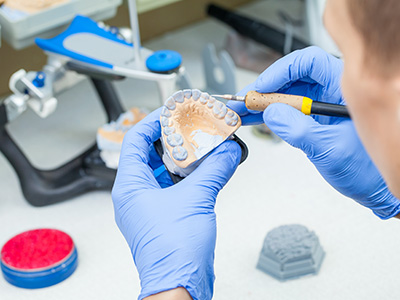
Once the restoration is designed, the fastmill.io™ transfers the design to its milling chamber. Within a matter of minutes the system mills the restoration from a block of ceramic or composite material. After milling, the piece is refined, stained, and glazed in-house to achieve the desired esthetic and surface characteristics before being seated that same day.
Because the entire sequence is managed in the office, patients experience fewer appointments, less time in temporary restorations, and a streamlined path from diagnosis to delivery. The simplified scheduling and reduced overall treatment time make it easier for busy families and working professionals to complete necessary restorative care.
fastmill.io™ is compatible with contemporary dental ceramics and high-performance composites selected for long-term durability and lifelike translucency. These materials are formulated to mimic natural enamel’s optical properties while providing the wear resistance required for everyday chewing. When finished properly, restorations achieve a balance between strength and esthetics that blends seamlessly with surrounding teeth.
Ceramic blocks used in the milling process are produced to tight quality standards, offering consistent density and color gradients that technicians can leverage when customizing shade and characterization. This consistency helps the final restoration maintain color stability and resist staining over time when cared for with routine hygiene practices.
Because the materials are processed and finished on-site, our clinicians and technicians can make precise adjustments to shade, anatomy, and surface texture. That direct control improves the likelihood of a close visual match and a restoration that satisfies both functional and cosmetic expectations in everyday use.
Fit is a primary determinant of a restoration’s clinical success. Poorly fitting crowns can lead to sensitivity, marginal staining, and challenges with hygiene. The digital workflow used with fastmill.io™ reduces manual steps that can introduce error: the scanner captures exact anatomy, the software proposes a restoration tailored to that data, and the mill executes a program with fine tolerances.
Advanced CAM (computer-aided manufacturing) operations allow the mill to reproduce margins and internal contours that closely match the prepared tooth. When combined with try-in checks and conservative adjustments, this level of precision supports secure cementation and a comfortable final result that performs well under normal function.
For clinicians, the predictability of a digitally guided restoration simplifies chairside decision-making. For patients, it means fewer surprises—less need for extensive reshaping or repeat appointments—and a restoration that feels natural in the mouth from the first appointment onward.
Reducing the number of visits required for restorative care is often the most noticeable benefit for patients. With same-day milling, the need for provisional crowns and the inconvenience of additional lab turnaround time are minimized. Many patients appreciate completing treatment in a single visit while still receiving a durable, well-finished restoration.
The in-office approach also reduces exposure to interim materials and the potential for provisional complications like detachment or wear. Since the final restoration is delivered promptly, the interval during which a tooth is protected by a temporary is shorter, lowering the chance of sensitivity or damage between appointments.
From a clinical standpoint, streamlining the workflow improves scheduling flexibility and allows the dental team to manage cases more predictably. Staff can coordinate scanning, design, milling, and finishing in a controlled sequence that optimizes chair time and maintains high standards of infection control and patient comfort.
fastmill.io™ is not a replacement for clinical judgment—it's a tool that extends what skilled clinicians and technicians can achieve. Our clinicians guide every restorative case from diagnosis through design and final seating, ensuring that digital tools are applied with an emphasis on biology, occlusion, and long-term oral health. This oversight is essential to successful outcomes and conservative tooth preservation.
Because the entire fabrication process happens in-house, our team maintains close control over each step—including shade selection, surface finishing, and marginal refinement. That hands-on oversight helps ensure that restorations meet both functional requirements and patient expectations for appearance, while also allowing adjustments when complex or nuanced anatomy is involved.
When combined with evidence-based preparation principles and careful follow-up, in-office milling supports durable, conservative restorative care. The technology complements established clinical protocols rather than replacing them, enabling our team to deliver efficient, patient-centered solutions.
In summary, the fastmill.io™ In-Office Mill brings digital design, precise milling, and high-quality materials into a single appointment—helping patients complete restorative care with fewer visits and a predictable, natural-looking result. If you’d like to learn more about how same-day restorations could fit into your treatment plan, please contact us for additional information.
The fastmill.io™ in-office mill is a compact digital milling system that enables clinicians to design and fabricate restorations within the dental office during a single appointment. It integrates with intraoral scanning and CAD/CAM design software so the digital impression, restoration design, and milling process occur in a continuous workflow. This technology is intended to reduce steps in the traditional lab workflow while maintaining clinical control over restoration fit and esthetics.
In our practice the system is used to produce crowns, inlays, onlays, and similar single-unit restorations from ceramic and high-performance composite blocks. Because fabrication and finishing take place on-site, the team can refine shade, anatomy, and surface texture before seating the final piece. That direct oversight supports a predictable, efficient restorative experience for patients who need single-visit solutions.
The same-day process begins with an intraoral scan that captures high-resolution images of the prepared tooth and surrounding occlusion. Those images feed directly into CAD software where the clinician or dental technician designs the restoration and evaluates margins, contacts, and occlusal relationships in real time. Once the design is approved, the file is sent to the mill and the restoration is carved from a preselected material block inside the milling chamber.
After milling, the restoration is finished in-office with staining, glazing, or polishing to enhance color and surface characteristics. The clinician performs a try-in to confirm fit and occlusion, makes any conservative adjustments, and then permanently seats the restoration during the same visit. This consolidated sequence reduces the need for provisional restorations and minimizes the total number of appointments for the patient.
fastmill.io™ is compatible with dental ceramics and high-performance composite blocks engineered for strength and lifelike translucency. Ceramic blocks offer predictable color gradients and optical properties that mimic natural enamel, while composite blocks may provide alternative handling and wear characteristics. Both material classes are selected to balance esthetics and function so restorations blend with adjacent teeth when finished properly.
Shade selection and final characterization are performed in-office, allowing clinicians to layer stains or adjust glazing to match surrounding dentition. Because manufacturers produce ceramic blocks to tight quality standards, technicians can rely on consistent density and color behavior during finishing. With routine oral hygiene and appropriate maintenance, these materials are designed to retain color stability and resist staining over time.
Many patients who require single-unit restorations—such as crowns, inlays, or onlays—can be appropriate candidates for in-office milling, provided the tooth preparation and surrounding oral conditions are suitable. Candidates typically have adequate tooth structure to support a restoration and stable periodontal health that allows predictable margin placement. The clinician evaluates each case to determine whether same-day fabrication meets functional and esthetic goals.
Certain complex cases may require additional planning or laboratory collaboration, including large-span bridges, advanced esthetic layering, or situations involving extensive occlusal rehabilitation. Patients with active untreated decay, uncontrolled periodontal disease, or specific implant connections may need staged care or lab-fabricated components. Final candidacy is determined during a clinical evaluation and treatment planning consultation.
Accuracy is a core advantage of a digital workflow: intraoral scanning captures detailed anatomy, CAD design refines margins and contacts, and the mill executes precise toolpaths with fine tolerances. This chain of digital control reduces manual steps that can introduce error, supporting a close internal fit and well-defined margins when the clinician follows evidence-based preparation protocols. Consistent fit is an important factor in the clinical longevity of a restoration.
Longevity also depends on material selection, patient bite forces, oral hygiene, and the quality of cementation and occlusal adjustment. High-quality ceramic and composite blocks processed and finished in-office can provide durable performance for everyday function when properly indicated. Regular dental checkups and routine hygiene help detect wear or marginal changes early, supporting the restoration's long-term success.
Your appointment will typically include tooth preparation, intraoral scanning, digital design review, and the milling and finishing steps required to deliver the final piece. Local anesthesia is used when needed for patient comfort during preparation, and the scan process replaces traditional physical impressions in most cases. After the clinician approves the digital design, the mill fabricates the restoration while the team prepares for finishing and try-in.
Depending on the complexity of the case, the single visit often ranges from one to several hours to allow for milling, characterization, and a careful try-in before cementation. The clinician performs final adjustments and bonds the restoration once fit and esthetics meet the planned outcome. The in-office approach minimizes time spent with temporary materials and reduces the need for multiple separate appointments.
Delivering a final restoration in the same visit reduces the number of appointments and shortens the time a patient spends with a provisional crown or temporary restoration. Fewer visits mean less interruption to work and family schedules, and a smaller interval with an interim restoration lowers the risk of provisional detachment or sensitivity. Many patients find the consolidated workflow more convenient while still receiving a high level of clinical oversight.
From a clinical perspective, completing fabrication and finishing on-site allows the team to control infection-prevention protocols, monitor tissue response, and make immediate refinements if needed. This streamlined coordination of scanning, design, milling, and finishing improves scheduling flexibility and can enhance the overall patient experience. Comfort measures such as local anesthesia and chairside support remain part of routine care throughout the process.
Precision begins with an accurate intraoral scan that captures margin details and occlusal relationships, followed by CAD software that evaluates contacts and proposes an anatomy for the restoration. Clinicians perform digital checks and manual inspections during a try-in to confirm marginal adaptation and occlusal balance. Conservative adjustments are made chairside as needed to refine fit and ensure that the restoration integrates well with the bite.
Proper cementation protocol, isolation, and finishing techniques further contribute to clinical success by securing the restoration and polishing margins to reduce plaque accumulation. Postoperative occlusal checks and adjustments help distribute forces evenly and minimize premature contacts. The combination of digital planning and hands-on verification supports a stable, comfortable result for the patient.
Yes. While in-office milling handles many single-unit and small restorations effectively, certain clinical situations benefit from specialized laboratory fabrication. Examples include long-span fixed prostheses, highly layered esthetic cases that require porcelain layering by a ceramist, or complex implant-supported frameworks that need laboratory-only components. These scenarios may demand techniques, materials, or laboratory processes that extend beyond chairside milling capabilities.
The clinician will recommend the most appropriate workflow based on functional demands, esthetic goals, and long-term maintenance considerations. In some cases a hybrid approach—using in-office milling for provisional or single-unit restorations and lab-fabrication for other components—provides the best overall outcome. Treatment planning is individualized so the chosen method aligns with each patient’s clinical needs.
Quality control begins with clinician oversight at every step: diagnosis, preparation, scanning, digital design review, and final seating. Because fabrication and finishing happen in-house, the team can verify shade matching, surface texture, and marginal integrity before cementation, and they follow established sterilization and bonding protocols to protect patient health. Documentation of the digital design and material selection also supports future maintenance or remakes if adjustments are required.
Village Dental of Leesburg schedules follow-up visits to confirm fit, occlusion, and patient comfort, and we provide guidance on home care and routine hygiene to preserve restoration longevity. If a patient notices sensitivity, roughness, or other concerns, the team evaluates the restoration and performs conservative adjustments when appropriate. Regular dental exams and cleanings remain important for monitoring the restoration and overall oral health.